Most telecom CRMs were built to log customer records, not to act on them. The result: subscriber data sits in one system, billing in another, network usage in a third, and the contact center sees none of it in time to matter. By the time a high-value subscriber complains, the churn signal has been ignored for weeks.
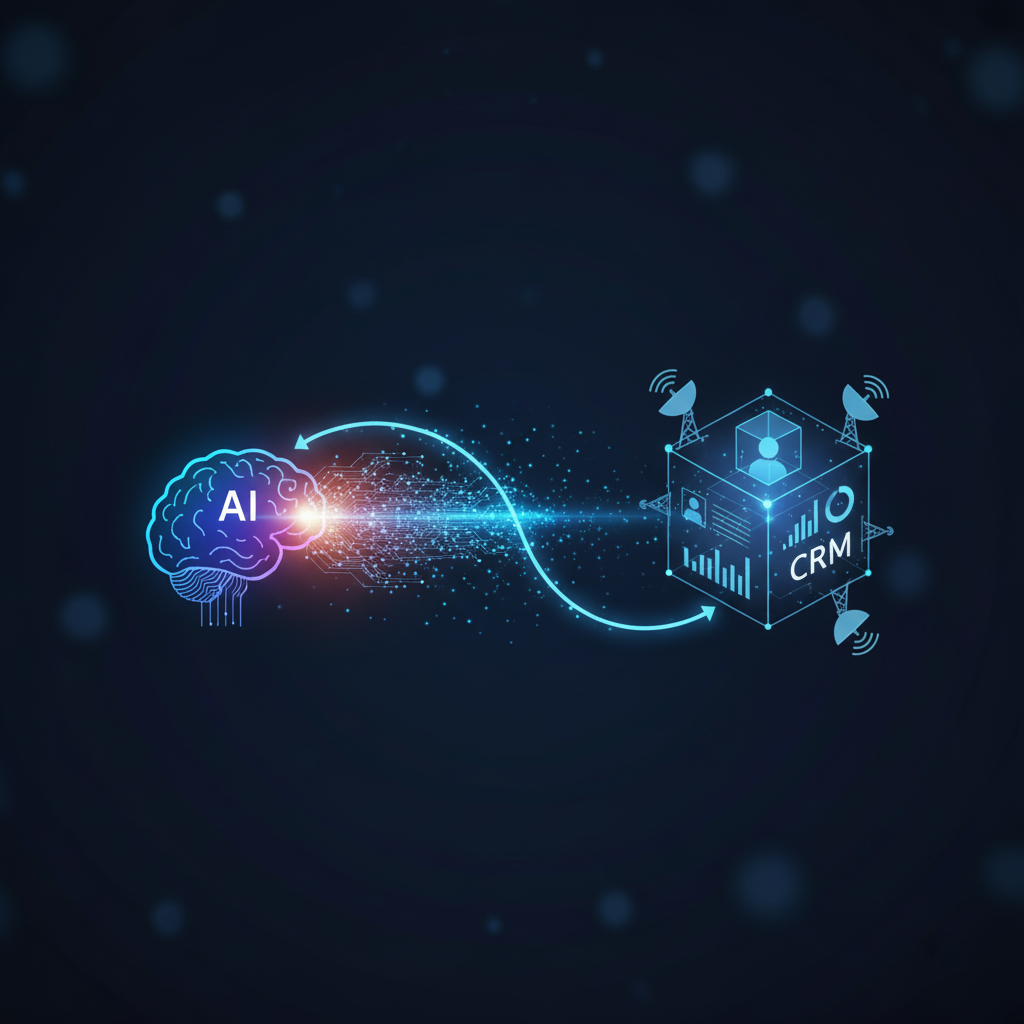
AI-integrated CRM for telecom changes the operating model. It is a CRM that reads live signals from billing, charging, network usage, and care interactions, then prompts the next best action — to a self-care bot, an agent in the contact center, or a sales rep on an upsell call. For CSPs, the measurable outcomes are two: lower churn and higher ARPU per active subscriber. The rest of this post explains how, where the AI fits inside an existing BSS estate, and what real Alepo deployments are reporting today.
What Does AI-Integrated CRM Actually Do Differently in Telecom?
A traditional telecom CRM software stack is a system of record. Subscriber details, plan history, ticket history, and contact logs are stored — but acting on them requires a human to log in, query, and decide.
An AI-integrated CRM is a system of action. The CRM is fed continuously by the BSS — billing events, charging data, plan usage, payment status, network experience — and an AI layer on top reads those signals in real time. When a signal crosses a threshold (dropped calls in a billing cycle, data overage trending high, a payment slip, three care contacts in a week), the AI does one of three things:
- Triggers a self-care prompt to the subscriber through the app or web portal.
- Surfaces the full subscriber context to an agent the moment a call connects, with a recommended next step.
- Routes a qualified upsell or retention offer to a sales rep with the supporting evidence.
This is the difference between knowing a subscriber is at risk and doing something about it before the cancel form opens. For CSPs running a fragmented stack — CRM in one place, billing in another, contact center on a third platform — AI integration only works when the underlying data is unified. That is why the BSS layer matters as much as the AI layer; we return to that point in the BSS-CRM unification section below.
How Does Predictive AI Reduce Churn for CSPs?
Churn in telecom is rarely a single event. It is a pattern — declining usage, a billing dispute, a service ticket that took too long, an offer from a competitor at the right moment. By the time a subscriber calls to cancel, the predictive signal has been visible for thirty to ninety days. Most CRMs miss it because no one is watching the right combination of inputs.
AI customer experience telecom platforms close that gap. The AI ingests billing, usage, care, and sentiment data, scores each active subscriber for churn risk daily, and acts on the top-risk segment automatically:
- Subscribers showing early disengagement get a personalized retention offer through self-care — a plan adjustment, a usage credit, a service add-on — without an agent in the loop.
- Subscribers in the high-risk band get a proactive outbound contact from a human agent, with the AI surfacing the likely cause and the recommended save offer in the CRM.
- Sentiment from care interactions feeds back into the model, so the AI learns which offers convert which segments.
Operators using Alepo’s AI Customer Assistant for self-care report up to 60% reduction in inbound support contacts on routine issues — the same engine that handles routine queries also runs the retention prompts. Lüm Mobile, a SaskTel brand in Canada, deployed Alepo AI CX to handle subscriber care and retention end-to-end. The platform now resolves the majority of routine subscriber contacts without an agent, freeing the contact center to focus on the high-value retention conversations that actually move the churn number.
How Does AI Empower Agents with Real-Time Customer Context?
Contact center handle time is the cost line every CSP COO watches. Most of that time is spent on tasks the agent should not be doing manually: looking up the subscriber, reading the ticket history, checking the plan, finding the right knowledge article, deciding what to offer.
An AI agent assistant telecom platform sits inside the CRM and does that work for the agent in the seconds before the call connects. When the call routes in, the agent screen shows: the subscriber’s last three interactions, the billing or service event that likely triggered the call, the recommended resolution, and the next-best action — retention offer, upsell, or escalation. Alepo’s AI Agent Assistant also coaches the agent during the call, prompting the right responses based on call sentiment and intent.
Alepo deployments are reporting a 35% reduction in average handle time and a 30% lift in agent productivity from the AI Agent Assistant. The handle time gain comes from removing manual lookups; the productivity gain comes from agents handling more conversations per shift without quality dropping.
For an operator with a 200-seat contact center, those numbers translate directly into either lower cost-to-serve or higher capacity at the same headcount. Most CSPs choose to redeploy the freed capacity into outbound retention and upsell — which connects directly to the next section.
How Does AI-Driven Upsell Increase ARPU at Scale?
ARPU growth is harder than churn reduction. It requires identifying the right subscriber, with the right offer, in the right moment — at a scale no human-led sales motion can sustain. This is where AI sales automation in telecom changes the unit economics.
Alepo’s AI Sales Assistant — Aly — reads the same unified customer data that drives churn prediction, but uses it for the opposite outcome: identifying subscribers ready for an upgrade, a new service line, or an add-on. Aly is telecom-trained and pre-integrated with Alepo Digital BSS, so it knows the catalog, the eligibility rules, and the pricing logic without separate integration work.
The mechanics:
- Aly scores active subscribers daily for upsell propensity based on usage patterns, plan fit, and lifecycle stage.
- Eligible subscribers receive a personalized offer through self-care, in-app messaging, or — for high-value targets — a routed call to a sales rep with the full context in the CRM.
- Offers that convert feed back into the model. Offers that do not get retired.
The AI does not replace the sales team. It tells the sales team which subscribers to call and what to offer when they do. For CSPs running an undifferentiated outbound motion today, this is typically the largest ARPU lever available without launching a new product.
How Does BSS-CRM Unification Enable True Omnichannel CX?
Every claim above depends on one foundation: the CRM, the BSS, and the AI layer have to share data in real time. An AI agent assistant that sees stale billing data is worse than no AI at all — it will recommend offers the subscriber is not eligible for, or miss disputes the subscriber is actively raising. This is why Alepo’s approach starts with the Digital BSS platform: the CRM, charging, catalog, self-care, and AI layer are built as one stack, not five products stitched together.
BSS-CRM integration in this model means three things:
- One subscriber record. The CRM and the billing system are reading the same data, not synced overnight.
- One offer catalog. Self-care, the agent screen, the sales assistant, and the upsell engine all pull from the same catalog and the same eligibility rules.
- One AI layer. Churn prediction, agent assist, and sales propensity all run on the same unified data — so the model improves faster and the experience the subscriber gets across web, app, contact center, and outbound sales is consistent.
The omnichannel telecom CX outcome only holds when the underlying data does. CSPs that try to bolt an AI layer onto five disconnected systems get five disconnected AI experiences. CSPs that unify the BSS and CRM first get the operating model the AI was designed for. For operators running a contact center alongside this stack, Alepo’s AI CCaaS solution connects the unified data layer directly to the voice channel.
Where to Start
For most CSPs, the highest-leverage first move is not a full BSS replacement — it is to unify the customer data the existing CRM and BSS already hold, and to add the AI layer on top. Alepo’s AI CX modules are designed to deploy alongside an existing BSS estate, with the option to modernize the underlying platform on a longer timeline.
Ready to see what AI-integrated CRM looks like on your subscriber base? Request a demo.
Frequently Asked Questions
Traditional telecom CRM is a system of record — it stores subscriber data for humans to query. AI-integrated CRM is a system of action — it reads live data from billing, charging, and network usage, then automatically triggers self-care prompts, agent recommendations, or sales offers based on real-time subscriber signals.
Yes. AI churn prediction models score active subscribers daily based on usage trends, billing events, care interactions, and sentiment signals. The CSP can then automate retention offers to the highest-risk subscribers through self-care, route at-risk accounts to retention agents, or trigger plan adjustments before the cancel request comes in.
An AI agent assistant surfaces full subscriber context the moment a call connects — recent interactions, billing or service events that likely triggered the call, recommended resolutions, and the next-best action. Alepo deployments report a 35% reduction in average handle time and a 30% lift in agent productivity from the Alepo AI Agent Assistant.
Omnichannel CX only holds when the underlying data does. If the CRM, billing, catalog, and AI layer are not reading the same data in real time, the subscriber gets inconsistent experiences across self-care, agent, app, and sales channels. BSS-CRM unification gives one subscriber record, one offer catalog, and one AI layer — which is what real omnichannel requires.