




AAA Server

Carrier-Grade AAA Server for All Network Types

Alepo's AAA Server manages network access for Communication Service Providers by authenticating users, authorizing services, and tracking usage across millions of sessions with enterprise-grade security and reliability.

Benefits and Business Impact

Alepo's AAA Server helps CSPs secure, scale, and optimize network access.

Operational Excellence

Unify authentication with self-healing architecture that reduces operational complexity and ensures continuous service availability.

Enhanced Security Posture

Advanced security features and audit trails protect against authentication attacks while maintaining performance and meeting regulatory standards.

Revenue Enablement

Real-time integration with charging and policy systems enables dynamic service offerings and accelerates deployment from months to days.

Cost Optimization

Consolidate multiple AAA systems onto one platform with flexible deployment options to optimize infrastructure and operational costs.

Gemini_Generated_Image_biz5z8biz5z8biz5

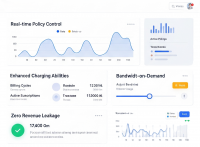
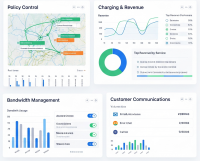
Real-Time Policy Control With Enhanced Charging Abilities

Alepo's AAA Server enables prepaid plans with zero revenue leakage, bandwidth-on demand services, and instant customer communication through real-time policy control and quota management.

Mid-session policy changes allow new plans and services without subscriber disconnection, while dynamic hotlining redirects customers based on packet requirements.

Built for Next-Generation Networks

Our AAA Server delivers carrier-grade authentication, authorization, and accounting across broadband, mobile, and WiFi networks.

  • RADIUS: Full RFC compliance for broadband, WiFi, and legacy network integration
  • Diameter: Complete 3GPP support for LTE, 5G, and mobile core integration
  • TACACS+: Secure network device administration and management
  • Unified Platform: Manage all protocols from a single interface and database 
  • 99% Uptime: Five-nines availability with stateless, self-healing architecture
  • 36,000+ TPS: Industry-leading transaction processing capacity
  • Sub-millisecond Latency: Instant authentication responses that enhance user  experience 
  • Horizontal Scaling: Add capacity seamlessly as your subscriber base grows
  • Fraud Detection: Real-time identification and blocking of suspicious authentication  attempts 
  • Signaling Filtering: Eliminate authentication noise and protect network resources
  • Role-Based Access: Granular permissions and administrative controls
  • Audit Logging: Comprehensive tracking for compliance and forensics 
  • 5G Core Integration: Native support for 5G standalone and non-standalone  architectures 
  • Network Slicing: Authentication and authorization for differentiated network  services 
  •  IoT Authentication: Optimized protocols for massive IoT device connectivity
  •  Edge Computing: Distributed deployment for ultra-low latency applications
Gemini_Generated_Image_sz4fc6sz4fc6sz4f (1)

Trusted client feedback

See Alepo AAA Server in Action

You need an AAA solution that scales effortlessly while securing your network and enabling  new service opportunities. Schedule a demo and get started today.

What Sets Alepo's AAA Server Apart

Beyond Open-Source Limitations

Alepo AAA Server delivers carrier-proven performance with millions of subscribers, comprehensive support, and enterprise-grade reliability that scales effortlessly with your growth.

Freedom from Vendor Lock-In

Our modern, cloud-native architecture future-proofs your investment while preserving technology choice flexibility.

Unified Instead of Fragmented

Alepo AAA Server consolidates all authentication protocols into one intelligent platform with integrated policy enforcement and revenue enablement capabilities.

Alepo AAA Server
Frequently Asked Questions

If you run a broadband network, a mobile service, or an MVNO, every subscriber session starts at the same place: the AAA server. It handles three things — Authentication (confirming who is connecting), Authorization (deciding what they are allowed to do), and Accounting (recording what they did for billing and reporting).

Two protocols do the heavy lifting here. RADIUS has been the standard in fixed broadband and enterprise environments for decades. Diameter is what took over in 4G LTE and carries through into 5G. The AAA server sits at the entry point of every session, which is why getting it right matters more than most operators realize until something goes wrong.
Authentication is the first gate. Before any subscriber gets onto your network, the AAA server checks whether they are who they claim to be.

What that check looks like depends on the network. Broadband subscribers typically authenticate with a username and password. Mobile subscribers use SIM-based methods like EAP-SIM or EAP-AKA. Enterprise access often relies on digital certificates. The question authentication answers is specific and narrow: is this the real subscriber? Everything else — what they can access, how much they use — waits until that question is resolved. It is what stops unauthorized devices from quietly consuming resources and what gives operators a defensible audit trail if something goes wrong.
Three things, in order, for every session on your network:

Authentication checks the subscriber's identity before anything opens — credentials, SIM data, or certificates, whatever the network requires.

Authorization looks up the subscriber's plan and pushes the right access rules to the network edge: data speeds, session limits, service entitlements, and any restrictions that apply to that account.

Accounting tracks the session from start to finish — volume, duration, connection details — and feeds that data downstream into your billing system.

The AAA server connects directly to network edge equipment like BRAS and BNG routers, as well as to your billing platform and subscriber database. It is where access decisions and usage records meet, which is why a poorly configured or undersized AAA server creates problems across multiple systems at once.
Not quite — AAA is a framework that defines three functions. The protocols that carry those functions across your network are RADIUS and Diameter.

RADIUS is the workhorse for broadband, enterprise, and Wi-Fi environments. It handles authentication and accounting reliably across fixed-line and wireless scenarios and has decades of operator trust behind it.

Diameter was built for 4G LTE and 5G, where session volumes are higher and policy requirements are more complex. It covers the interfaces — S6b, SWx, SWm — that RADIUS was never designed for.

Both protocols execute the same three AAA functions, suited to different environments and traffic profiles. From a security standpoint, the AAA framework gives operators a structured way to enforce access control, log authentication events, and maintain session records for audit and compliance. That is not incidental to security — it is foundational to it.
Here is the sequence that runs behind every subscriber session:

1. Access request — A subscriber's device connects to a network element (a BNG router for broadband, a 5G SMF for mobile data). That element sends an access request to the AAA server.

2. Authentication — The AAA server checks the subscriber's credentials against its own database or an external identity store, such as an HSS or LDAP directory. If credentials do not match, the session stops here.

3. Authorization — If authentication passes, the server looks up the subscriber's plan and returns the appropriate access attributes to the network edge: speeds, quota limits, session restrictions, and applicable service entitlements.

4. Access granted — The network element applies those attributes and opens the session.

5. Accounting — Usage records come in at regular intervals throughout the session — volume, duration, connection data — feeding the billing system. A final record closes out when the session ends.

The whole sequence happens in milliseconds, at scale, for every subscriber connecting to your network. When it works well, it is invisible. When it does not, operators feel it fast.

Subscribe to our Newsletter

Receive the latest news

Subscribe To Our Newsletter