TLDR
- Outside secure networks, RADIUS/UDP and RADIUS/TCP MUST NOT be used; inside them they are NOT RECOMMENDED (Section 3.1).
- Links that leave a secure network MUST use RadSec or transport-layer security such as IPsec, and RadSec is RECOMMENDED (Section 3.2).
- Every version of MS-CHAP is deprecated, and it may be used only inside RadSec or a TLS-based EAP tunnel (Section 3.3).
- RadSec’s standards-track specification is in the RFC Editor queue, not yet an RFC either.
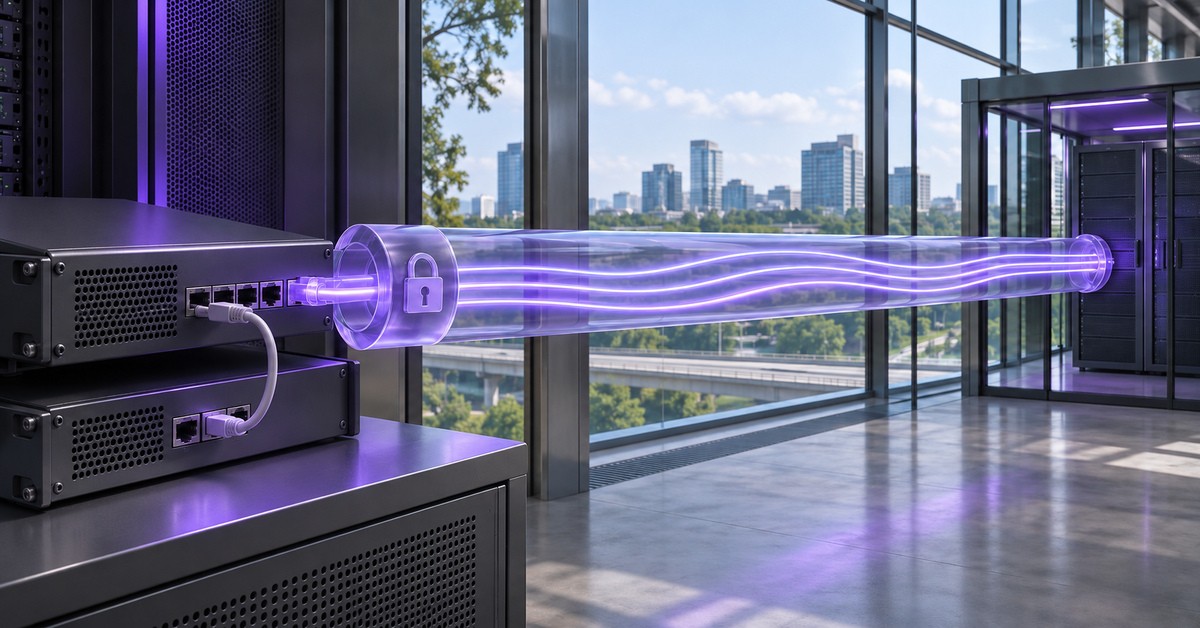
As of November 17, 2026, an Internet Engineering Task Force (IETF) draft, “Deprecating Insecure Practices in RADIUS”, deprecates RADIUS over plain UDP and TCP outside secure networks, and it deprecates MS-CHAP. Systems sending RADIUS across untrusted networks must use RadSec (RADIUS over TLS or DTLS) or IPsec, with RadSec recommended. Inside a properly secured network, RADIUS/UDP is still allowed.
The latest revision is draft ietf radext deprecating radius 10, dated July 3, 2026, an active document of the IETF RADIUS Extensions (RADEXT) working group. Its IESG (Internet Engineering Steering Group) state is “I-D Exists”, so it has no RFC number yet and can still change.
RADIUS (Remote Authentication Dial-In User Service) links network access servers (NAS), such as broadband network gateways (BNG), to the authentication, authorization and accounting (AAA) platform. By the draft’s own estimate, millions of devices use RADIUS/UDP every day (Section 6).
The draft responds to BlastRADIUS (CVE-2024-3596), disclosed in July 2024, which showed that an on-path attacker could forge RADIUS/UDP responses through MD5. It also finishes the crypto-agility work that RFC 6421 started in 2011.
What the IETF change says: deprecating insecure RADIUS practices
The RADEXT document draft-ietf-radext-deprecating-radius is intended for the Standards Track and would update RFC 2865, RFC 2866, RFC 5176 and RFC 7585. In BCP 14 terms, MUST NOT is a hard rule and NOT RECOMMENDED allows justified exceptions. What is mandatory is secure transport, either RadSec or transport-layer security such as IPsec, so RadSec on its own is not.
Table 1. What draft-ietf-radext-deprecating-radius-10 changes
| Practice | Status in draft-10 | What operators do |
| RADIUS/UDP or RADIUS/TCP outside a secure network | Deprecated: MUST NOT be used (§3.1) | Move to RadSec, or carry inside IPsec (§3.2) |
| RADIUS/UDP or RADIUS/TCP inside a secure network | Permitted but NOT RECOMMENDED (§3.1); RADIUS/TCP NOT RECOMMENDED anywhere (§6.1) | Isolate on a management network and plan TLS (§6.1) |
| Links that leave a secure network | Secure transport mandatory: RadSec or IPsec, RadSec RECOMMENDED (§3.2) | Confirm RadSec support on every hop |
| MS-CHAPv1, MS-CHAPv2 and EAP-MSCHAPv2 | Deprecated (§3.3) | Allow only inside RadSec or a TLS-based EAP tunnel |
| Access-Request without Message-Authenticator (UDP or TCP) | Clients MUST add it; servers MUST send it first in responses (§4.2, §4.5) | Patch, then enable “require Message-Authenticator” (§4.3) |
| Short shared secrets | Implementations MUST support 32-octet secrets and warn at 12 or fewer (§7.1) | Use random secrets of 24 octets or more (§7.1) |
The Message-Authenticator changes need no flag day, because updated and legacy systems keep working together (Section 4). The draft also forbids new RADIUS-specific cryptography, so future security work must come from TLS or IPsec (Section 3.4.1).
What counts as a secure network for RADIUS?
Section 3.1 calls a network secure when it is believed safe from eavesdroppers and attackers, with IPsec between two systems as the example. Neither RADIUS endpoint can tell when a host there is compromised or a routing change exposes the traffic. Plain RADIUS therefore stays NOT RECOMMENDED even on such a network.

RADIUS/UDP inside a data center
Take a BNG and an AAA cluster in one facility, on a management VLAN (virtual LAN) or VRF (virtual routing and forwarding instance) that only administrators can reach. That segment usually fits the definition, so RADIUS/UDP on ports 1812 (RFC 2865 §3) and 1813 (RFC 2866 §3) stays permitted. Each link must still follow the Message-Authenticator rules in Section 4.
Across WAN, partners and cloud
Once a path leaves infrastructure the operator controls, it needs RadSec or IPsec. That covers internet backhaul from remote points of presence (POPs), mobile virtual network operator (MVNO) interconnects, roaming hubs and cloud-hosted Wi-Fi controllers. RADIUS/UDP is insecure there because its integrity checks rely on MD5 and most attributes travel in clear text.
RadSec is preferred because the RADIUS application sees TLS errors directly, while an IPsec fault typically reaches the server only as 100% packet loss (Section 3.2). TLS protects one hop at a time, so the draft also recommends fewer proxies and less personal data in roaming traffic (Sections 7.7 and 7.9).
To see the impact on ISPs, take a hypothetical fiber ISP with four POPs, one AAA site, an MVNO partner and a cloud hotspot service. Its BNG links run over a private MPLS (Multiprotocol Label Switching) management VRF, so they can stay on UDP for now with Message-Authenticator enforced. The internet-backhauled POP, the MVNO proxy and the hotspot controller move to RadSec, or to IPsec where a device cannot run TLS.
The same rules cover Change-of-Authorization (CoA) messages from AAA to each BNG on UDP port 3799 (RFC 5176 §2.1 and §2.2). In deployments we see, accounting feeds and CoA paths are the links most often missed in a transport audit.

MS-CHAP and other deprecated practices
Section 3.3 deprecates MS-CHAP in every form: the challenge-handshake method defined in RFC 2433 (v1) and RFC 2759 (v2), and EAP-MSCHAPv2. Known offline attacks are serious enough that implementers must treat MS-CHAP as equivalent to sending the password in the clear.
It may still run inside RadSec, or inside a TLS-based EAP (Extensible Authentication Protocol) tunnel such as PEAP or EAP-TTLS. RADIUS/UDP and RADIUS/TCP are off limits, because a proxy could forward MS-CHAP over an insecure hop. New RADIUS clients MUST NOT implement any version of it (Section 3.3).
For password logins, the draft recommends PAP (Password Authentication Protocol) over CHAP and MS-CHAP, with passwords stored salted and hashed (Section 7.4). Where certificates are practical, it prefers EAP-TLS, which avoids passwords entirely (Sections 7.4 and 7.5).
A NAS must rate-limit the Access-Requests it sends, and clients must retransmit with jitter and backoff (Sections 5.4.1 and 5.4.3). Servers must be able to delay an Access-Reject; about one second works well in practice (Section 5.4.4).
The article says RADIUS can no longer rely on MD5 for security. RadSec still computes the legacy MD5 fields, but inside TLS, which does the actual protecting. RFC 9765 (Experimental, April 2025) adds RADIUS/1.1, an Application-Layer Protocol Negotiation (ALPN) option that removes MD5 from TLS-based RADIUS once negotiated.
A 12-month RADIUS deprecation migration plan for operators
Operators can meet the main draft-10 requirements within 12 months by working in three phases: enforce Message-Authenticator, then secure untrusted links, then isolate internal RADIUS/UDP. None of these steps waits for the RFC.

Months 0 to 3: inventory and quick fixes
- Inventory every RADIUS link, including accounting and CoA, using the template below.
- Classify each path as secure or untrusted using the Section 3.1 definition, and record who signed off.
- Patch clients and servers for Section 4, then enable “require Message-Authenticator” per client once logs show the attribute (Section 4.3). The BlastRADIUS fix guide walks through the order.
- Replace short or shared secrets with random per-client secrets of 24 octets or more (Section 7.1).
- List the services that still use MS-CHAP outside a TLS-based EAP tunnel.
Record these fields for each link:
- Client and server roles (NAS, proxy, home server) and packet types (Access, Accounting, CoA, Disconnect)
- Transport and port: UDP 1812, 1813 or 3799, TCP, or RadSec on 2083
- Network path (management VRF, MPLS, internet, partner or cloud) and the secure-network decision
- Authentication methods carried: PAP, CHAP, MS-CHAP or EAP type
- Message-Authenticator status: sent by the client, required by the server
- RadSec readiness at both ends (TLS, DTLS, TLS-PSK) and the planned refresh date
Months 3 to 9: secure the untrusted links
- Move partner, roaming and cloud links to RadSec on port 2083 (RFC 6614 §2.1; radiusdtls-bis §3.1).
- Front any NAS that cannot run TLS with a local RadSec proxy or an IPsec tunnel (Section 3.2).
- Choose certificates or TLS-PSK (pre-shared key) per link; the draft recommends TLS-PSK support because it mirrors shared-secret practice (Section 6.2).
- Never reuse an old RADIUS/UDP secret as a TLS-PSK, and delete UDP configurations after cutover to block downgrades (radiusdtls-bis §7.7).
- Retire MS-CHAP wherever Section 3.3 is not met.
Months 9 to 12: harden and prepare for the RFC
- Move the remaining internal RADIUS/UDP onto an isolated management network, and plan TLS for it as defense in depth (Section 6.1).
- Write RadSec, TLS-PSK and MS-CHAP removal into 2027 refresh and request-for-proposal (RFP) requirements.
- Recheck the draft on datatracker quarterly, and keep classification records so compliance can be shown once an RFC number is assigned.
If several items need a platform change, run through the signs your AAA needs an upgrade and build an AAA security business case. A cutover touches every NAS, so availability matters: Alepo’s standards-based AAA server is specified for 99.999% availability in its AAA Server datasheet.
FAQs
Q1. Is RADIUS being deprecated?
No. The draft deprecates insecure ways of running RADIUS, such as plain UDP and TCP outside secure networks, and MS-CHAP. RADIUS itself carries on over RadSec.
Q2. Is RADIUS/UDP still allowed inside a private network?
Yes, if the network is believed safe from eavesdroppers and attackers. Even then the draft calls it NOT RECOMMENDED and requires the Message-Authenticator changes on every UDP link.
Q3. What replaces RADIUS/UDP?
RadSec: RADIUS/TLS over TCP or RADIUS/DTLS over UDP, both on port 2083. Once published as an RFC, its standards-track specification will obsolete the Experimental RFC 6614 and RFC 7360.
Q4. Is MS-CHAP deprecated?
Yes, in draft-10. MS-CHAPv1, MS-CHAPv2 and EAP-MSCHAPv2 may run only inside RadSec or a TLS-based EAP tunnel such as PEAP or EAP-TTLS.
Q5. Is this an RFC yet?
No. As of November 17, 2026, draft-10 has IESG state “I-D Exists” and expires on January 4, 2027 unless revised. The draft sets no compliance deadline.
Q6. Does IPsec count?
Yes. Section 3.2 accepts IPsec, but recommends RadSec because a RADIUS server cannot see IPsec misconfigurations or failures.
Q7. What should operators do first?
Start with the link inventory and Message-Authenticator enforcement, then move partner and cloud links to RadSec or IPsec.
Conclusion: Preparing for RADIUS/UDP deprecation
The IETF draft sets no compliance timeline, so for most operators the practical deadline is the next equipment refresh. Equipment bought in the 2027 refresh cycle will likely stay in service for several years. That makes RadSec and TLS-PSK support worth writing into NAS, BNG and Wi-Fi controller requirements now.
The wording of draft-10 may still change before an RFC number is assigned, but the plan above does not depend on it. Its transport and integrity steps use published mechanisms: Message-Authenticator (RFC 2869 §5.14), RadSec (RFC 6614 and RFC 7360) and IPsec. An operator that finishes the inventory and enforces Message-Authenticator this quarter closes the BlastRADIUS exposure on those links, whenever the RFC appears.
Book a demo. See the Alepo AAA Server in a working session built around your network. Bring your RADIUS link inventory and migration questions, and an Alepo solutions architect will take you through them.